



You’re planning a Black Friday promotion, and 20% off sounds reasonable. Customers expect a deal, competitors are discounting, and more orders would make the weekend feel successful.
But will the sale actually make your business more money?
If you’re asking, “How much can I afford to discount on Black Friday?”, there isn’t one percentage that works for every business. Your answer depends on what each product costs, what you pay to sell and ship it, and how much you need to keep from every order.
Before announcing your sale, calculate what the discount will do to your numbers.
Why a 20% Discount Can Cost More Than 20%
A discount reduces the revenue you receive, but most of your order costs stay the same.
Your inventory doesn’t become cheaper because you marked it down. Packaging, postage, and advertising may not change either. Therefore, a 20% discount can reduce the amount remaining from an order by much more than 20%.
Your Black Friday offer should come from your business’s numbers, not simply from what larger retailers or other sellers are advertising.
How Much Can I Afford to Discount on Black Friday?
Use this calculation before choosing your offer:
Discounted sale price
– Cost of goods sold
– Marketplace and processing fees
– Seller-paid shipping
– Packaging supplies
– Promotion-specific advertising
– Other order-level costs
= Order-level contribution
Order-level contribution is the amount left to help cover your overhead and final profit. It isn’t the same as net profit because your business may still need to pay for software, payroll, insurance, rent, bookkeeping, and other operating expenses.
Still, this calculation gives you a clearer picture of whether the discounted order can support your business.
If you need help identifying these costs, our guide to real profit for resellers explains how inventory, fees, shipping, and supplies affect what you keep.
See What a Black Friday Discount Does to Your Profit
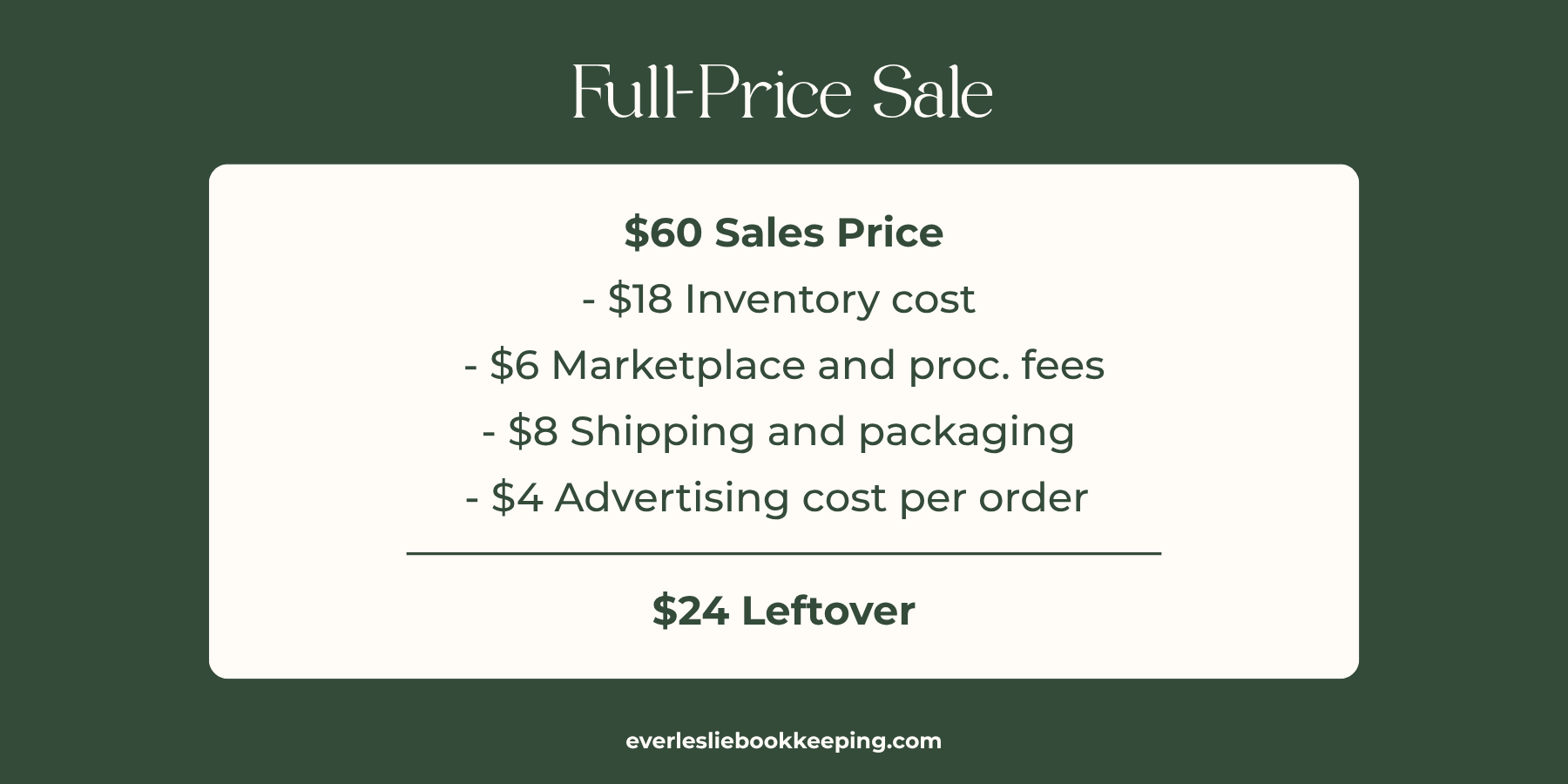
Suppose you normally sell an item for $60:
- Sale price: $60
- Inventory cost: $18
- Marketplace and processing fees: $6
- Shipping and packaging: $8
- Advertising cost per order: $4
Now suppose you offer 20% off. The customer pays $48.
Your percentage-based fees may decrease slightly, but your inventory, packaging, shipping, and advertising costs remain the same.
The discounted order might look like this:
- Discounted sale price: $48
- Inventory cost: $18
- Marketplace and processing fees: $4.80
- Shipping and packaging: $8
- Advertising cost per order: $4
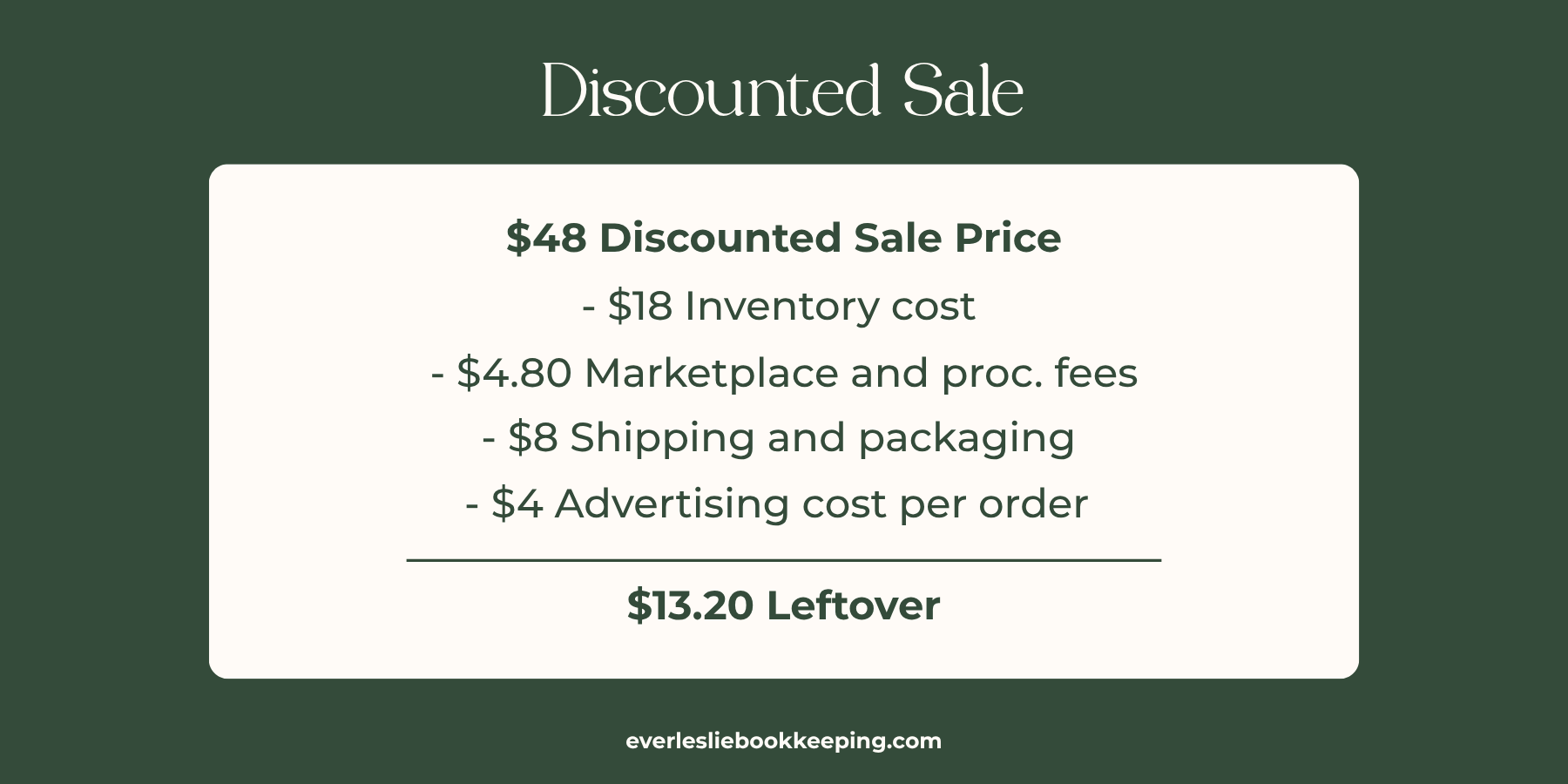
The advertised discount is 20%, but the order-level contribution falls by 45%.
You would need to sell approximately 82% more units at the discounted price to generate the same total contribution you earned at full price.
That doesn’t automatically make the sale a bad decision. It may move older inventory or introduce new customers to your business. However, you should know how many additional sales you need before choosing the offer.
Square’s guidance on profitable discounting also recommends calculating the additional sales volume required to offset a reduced margin.
Include Every Cost in Your Black Friday Calculation
Before settling on a discount, make sure you’ve included the full cost of each order.
Inventory
Start with what you paid for the item. ELB records inventory costs as cost of goods sold and records sales as sales.
A sitewide discount may affect products differently. An item that costs $10 and sells for $50 can handle a discount differently from one that costs $35 and sells for the same price.
Marketplace and processing fees
Whatnot, eBay, Etsy, Shopify, and payment processors have different fee structures. Some charge a percentage, while others include fixed transaction fees.
Use the platform’s current fee information and your actual seller reports. Don’t estimate fees based only on the amount deposited into your bank.
Our guide to recording marketplace sales in QuickBooks Online explains why sales, fees, refunds, and payouts should be tracked separately.
Shipping, packaging, and advertising
Include postage, seasonal surcharges, boxes, mailers, labels, tape, insurance, advertising, promoted listings, and affiliate commissions when applicable.
If you plan to offer a percentage discount and free shipping, calculate both costs. Combining the two can reduce the amount remaining from an order much faster than either offer alone.
Returns and refunds
Some holiday orders may be returned after the year ends. In addition, payment processors don’t always return their original fees when you issue a refund.
You can’t predict every return. However, reviewing your previous return rate can help you make a more realistic projection.
Consider Alternatives to a Sitewide Discount
A large percentage discount isn’t your only option. Depending on your numbers, you might protect more profit with:
- A smaller discount on selected products
- A bundle of complementary items
- A gift after a minimum purchase
- Free shipping above a calculated threshold
- A discount that starts above your normal order value
- Early access for returning customers
Run the calculation for each option. A promotion can feel valuable to customers without reducing the price of every product.
Review More Than Sales After the Promotion
Once Black Friday ends, review:
- Gross and net sales
- Number of orders
- Average order value
- Discounts given
- Cost of goods sold
- Marketplace and processing fees
- Shipping, packaging, and advertising
- Returns and refunds
- Contribution per order
Then compare those results with a normal sales period.
Your profit and loss statement can help you review the larger financial picture when your books are current.
Choose a Discount Your Business Can Support
So, how much can I afford to discount on Black Friday?
The right percentage leaves enough contribution to support your business while accomplishing the goal of the promotion. Calculate your costs first, decide how much you need to keep, and determine how many additional orders you’ll need.
If your sales, inventory costs, marketplace fees, and payouts have become difficult to bring together, explore ELB’s monthly bookkeeping services or schedule a free 15-minute discovery call with me!
Ever Leslie Bookkeeping provides bookkeeping and financial-organization services. We don’t prepare tax returns or provide tax advice. Please consult a CPA or qualified tax professional about decisions specific to your business.


Be the first to comment